Business
The Great Recalibration of 2026

Mr. Derrick Macharia
January 10, 2026
Energy, Power, and the End of the Old World Order
The world did not drift into 2026.
It crossed a threshold.
What once appeared as a succession of disconnected crises — regional wars, currency collapses, energy shocks, regime instability — has cohered into a single, systemic reality. The era of abstract “great-power competition” has ended. What has replaced it is far more concrete, far more dangerous, and far more honest: power now rests openly on energy, control, and political survivability.
This is not a return to the Cold War.
It is something colder — and far more fragmented.
Venezuela: The Hemisphere Rewritten
In early 2026, the political removal of Venezuela’s leadership did more than upend a single state. It rewired the strategic logic of the Western Hemisphere.
Venezuela, long written off as a failed petro-state, still sits atop the largest proven oil reserves on Earth. For years, those reserves existed in a paradoxical state: geopolitically priceless yet economically inert. Decayed infrastructure, sanctions, and institutional collapse ensured that Venezuela mattered symbolically more than materially.
That illusion has now shattered.
Markets did not panic. Instead, they recalibrated. Energy stocks surged not on current production — which remains limited — but on optionality: the future possibility of restored output under a different political order. This is how modern markets think. They do not price reality; they price paths.
More important than oil itself was the precedent set. The intervention signaled that energy security is no longer a background economic concern but a front-line strategic imperative. The Western Hemisphere is no longer treated as a passive sphere of influence. It is an actively managed security domain.
Sovereignty, once sacrosanct, is now conditional on stability.
Oil in the New World: Volatility Without Shock
Contrary to older models, oil prices did not explode. Global supply remains ample. Spare capacity exists. Demand growth has moderated.
But this stability is deceptive.
What has changed is not the quantity of oil — it is the mechanism of risk. Markets now price political legitimacy, reconstruction timelines, and regime durability alongside barrels per day. Energy has become less about extraction and more about governance.
In this new framework, a state’s oil is only as valuable as its ability to protect infrastructure, enforce contracts, and maintain continuity. Failed states do not produce oil; they produce volatility.
Iran: Internal Fracture Meets External Pressure
While Venezuela reshaped the Americas, Iran revealed the fragility of the Middle East’s old equilibrium.
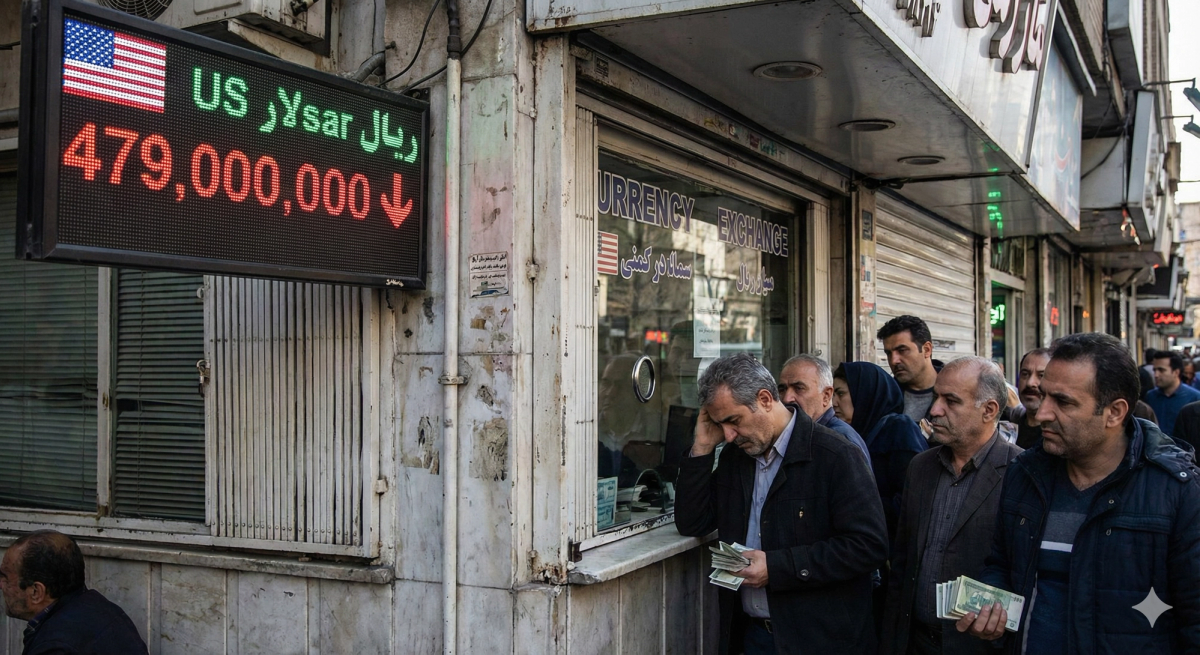
Years of sanctions, inflation, and economic mismanagement have hollowed out the Iranian social contract. What emerged in 2026 was not simply protest, but exhaustion — a population confronting currency collapse, declining purchasing power, and a state increasingly unable to deliver economic stability.
The strategic danger here is not immediate war. It is erosion.
Iran’s regional posture depends on coherence at home. As that coherence weakens, Tehran’s capacity to project power, manage alliances, and sustain long-term confrontation degrades. This introduces uncertainty not only in energy markets but across the entire security architecture of the region.
Weak states behave unpredictably — not because they seek chaos, but because they lack margin for error.
Sudan, Turkey, and the Peripheral Fault Lines
Beyond the headline arenas, quieter fractures are spreading.
Sudan remains trapped in a slow-motion collapse that threatens Red Sea shipping lanes and regional stability across East Africa and the Gulf. Turkey, balancing inflation, regional ambition, and strategic ambiguity, increasingly acts as a swing power rather than a stable anchor. Venezuela’s upheaval echoes across Latin America, while Iran’s strain reverberates through Central Asia and the Levant.
These are not isolated crises. They are networked stresses — local failures with global consequences.
The world is no longer organized around a few dominant flashpoints. It is shaped by interlocking vulnerabilities.
The End of Energy Neutrality
For decades, energy markets operated under a comforting assumption: that politics would eventually bend to supply and demand. That assumption is gone.
Energy security is now enforced, not negotiated.
States no longer ask whether energy will be disrupted. They plan for who controls recovery, who guarantees flow, and who absorbs risk. Intervention, reconstruction, and political alignment have become standard tools of energy strategy.
This is not ideological. It is structural.
A Fractured Multipolarity
The response to recent interventions exposed a deeper divide in the global system.
Some actors frame stability and democratic restoration as justification. Others see sovereignty erosion and norm collapse. Both interpretations are correct — and that is precisely the problem.
Global institutions strain under this contradiction. The rules were written for a world where power was constrained by consensus. Today’s world is shaped by capability and necessity.
Norms lag reality.
The Pattern Beneath the Chaos
Across regions and regimes, a consistent logic has emerged:
Resources define leverage, but governance determines usability.
Political legitimacy has become an economic variable.
Energy corridors matter as much as energy reserves.
Small crises now cascade globally.
This is not a world sliding toward a single global war. It is a world entering permanent strategic turbulence.
Power in the Age of Exposure
The Great Recalibration of 2026 marks the end of plausible deniability in global affairs.
Markets can no longer pretend politics is exogenous.
States can no longer outsource security to institutions.
Energy can no longer be treated as a neutral commodity.
Power today is exposed — raw, visible, and increasingly contested.
The emerging order is not defined by who produces the most, or who trades the fastest, but by who can endure instability, enforce continuity, and shape recovery.
History has not ended.
It has hardened.
And the world that emerges from this recalibration will not be governed by optimism — but by resilience.
About the author
Mr. Derrick Macharia
AI Engineer @Pawanax
Related articles

Business
A comprehensive Analysis of Kenya's Economy
There is a comforting myth many developing countries tell themselves: “What happens in Washington is far away. We have our own problems.” Kenya, like most emerging economies, knows this is not true — but still underestimates how deeply American fiscal de...
Mr. Derrick Macharia
December 13, 2025 · 5 min read

Business
How the World Quietly Crossed the Point of No Return
The Event Horizon of 2025 History rarely announces itself. It does not arrive with trumpets, declarations, or a single catastrophic day that future textbooks can easily circle in red. Instead, it moves through infrastructure, balance sheets, food systems...
Mr. Derrick Macharia
January 10, 2026 · 5 min read

Business
The best AI companies in Kenya
Unlocking the Trillion-Dollar Potential of Kenya’s Sovereign AI Revolution (2025-2030) 1. The Tectonic Shift in the Silicon Savannah The narrative of African technology has, for the better part of two decades, been monopolized by a single story: Fintech....
Mr. Derrick Macharia
December 12, 2025 · 5 min read
Stay in the loop
Get new articles on healthcare AI and African health systems.
Healthcare AI insights. Unsubscribe anytime.