Healthcare
Toxic Harvest

Mr. Derrick Macharia
January 12, 2026
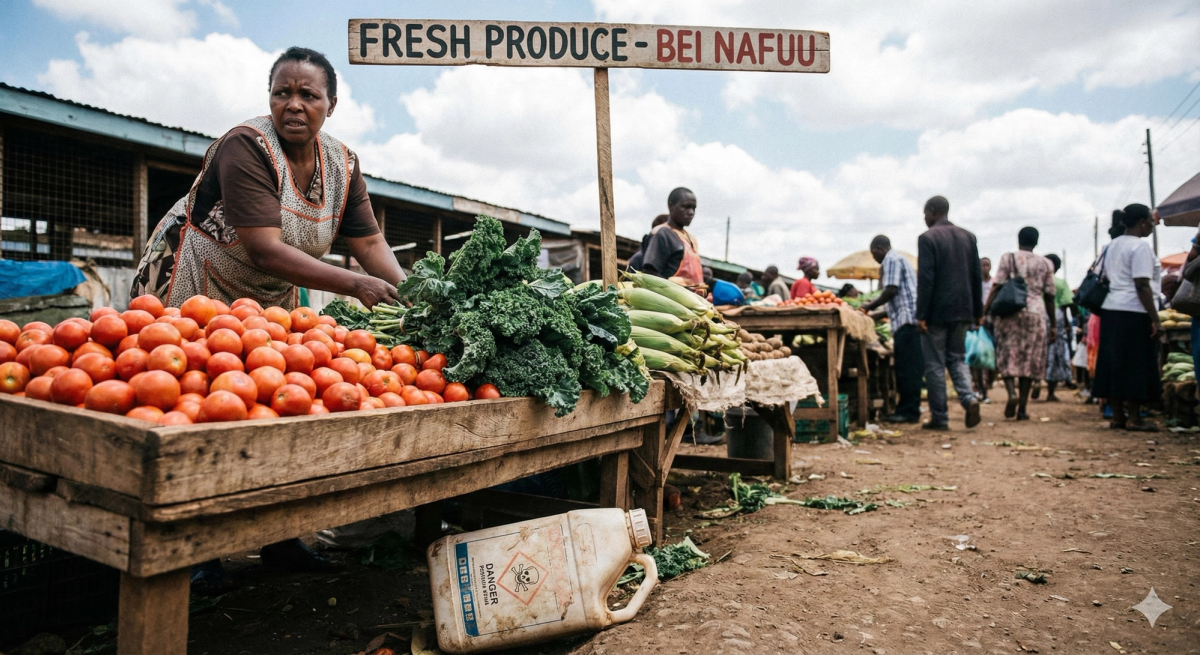
Why Kenya’s Food Plate is More Toxic Than You Think (And How to Fix It)
If you live in Kenya, you likely follow a familiar routine: you buy your Sukuma Wiki and tomatoes from the local mama mboga, and you pick up a packet of "Pure Pishori" rice from the supermarket for Sunday dinner. You wash the vegetables under the tap, boil the rice until the water dries up, and serve your family, believing you have provided a healthy meal.
You might be wrong.
An extensive agronomic and toxicological investigation into Kenya’s food systems reveals a terrifying reality: our kitchen staples are acting as delivery vehicles for a cocktail of neurotoxins, carcinogens, and heavy metals. From the tomato fields of Kirinyaga to the rice paddies of Mwea, the "Toxic Harvest" is real.
Here is what you need to know, and more importantly, how to defend yourself.
Why Farmers Keep Spraying
This crisis is not driven by reckless farmers. It is driven by structural pressure.
Kenyan agriculture faces aggressive pests — fall armyworm, tomato leafminer, aphids, fungal blights — alongside rising costs, shrinking margins, and volatile markets. Agrochemical companies step into this pressure vacuum with solutions that promise certainty: faster action, broader kill-rates, higher yields.
But pesticides create resistance.
Each season, pests adapt. Farmers respond by spraying more frequently, mixing multiple products, increasing concentrations, and shortening the time between spraying and harvest. This is known as the pesticide treadmill — and once on it, exit becomes economically dangerous.
The system rewards short-term yield and punishes restraint.
The Chemistry That Reaches Your Plate
Many of the pesticides used in Kenya are not simple surface sprays.
They are systemic chemicals, absorbed through leaves and roots and distributed throughout the plant’s tissues. That means residues end up inside tomatoes, maize kernels, and leafy greens — not just on the skin.
Several major chemical classes dominate Kenyan farming:
- Organophosphates, which interfere with nerve signaling and are linked to developmental brain damage.
- Carbamates, which disrupt hormones and degrade into carcinogenic byproducts when heated.
- Neonicotinoids, which affect nervous systems and persist in soil and water.
- Broad-spectrum herbicides, some of which are associated with blood cancers and neurodegenerative disease.
Some of these chemicals degrade slowly. Others transform into more toxic compounds during cooking.
This matters because Kenyan cuisine relies heavily on cooked vegetables — meaning exposure does not end at harvest.
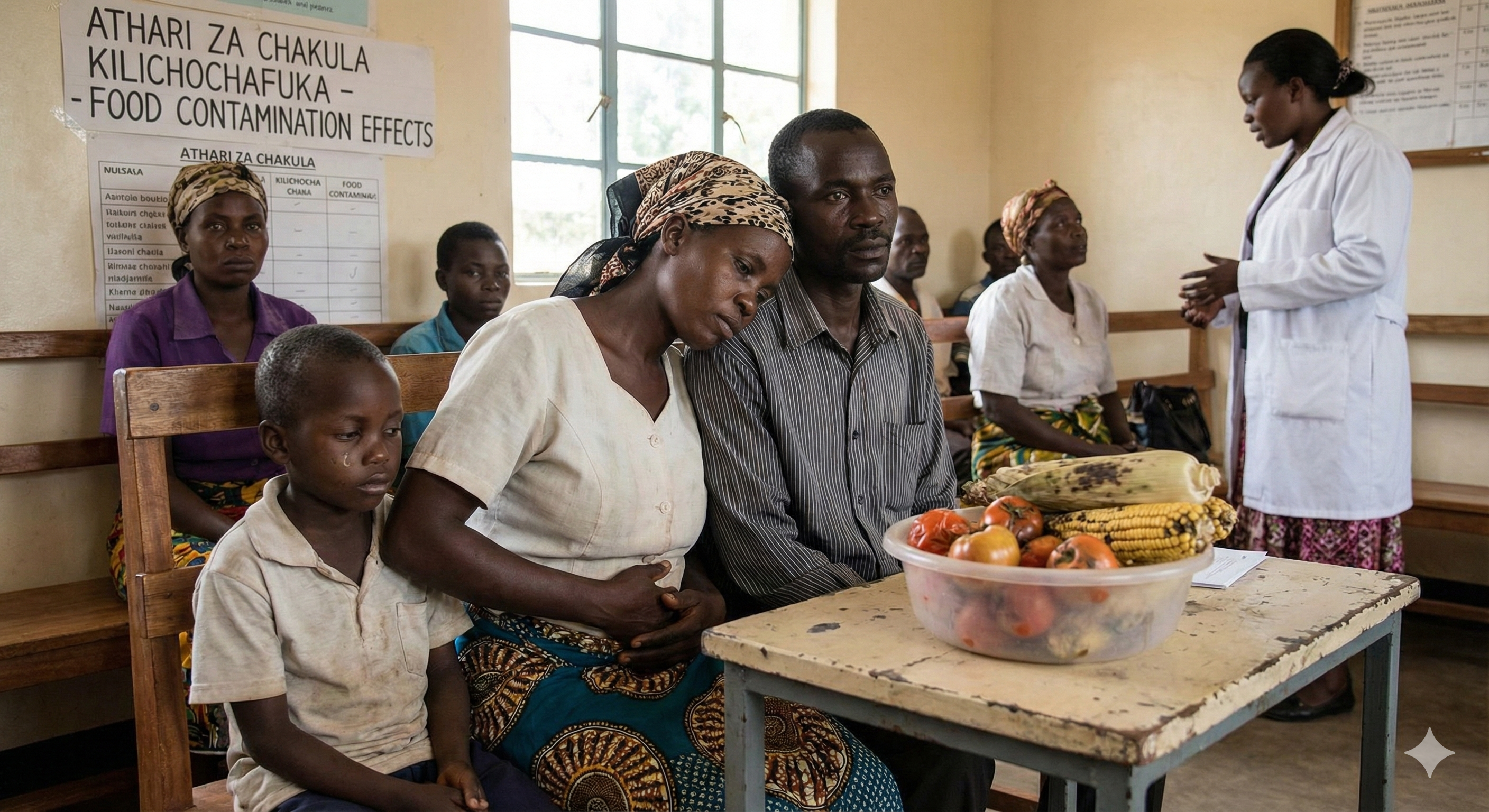
Disease Patterns Are Following the Chemicals
Across Kenya’s intensive farming regions, health trends are shifting.
Hospitals in high-spray zones report rising cases of:
- blood cancers such as leukemia and lymphoma
- hormone-dependent cancers like breast and prostate cancer
- infertility and pregnancy complications
- neurodevelopmental disorders in children
- Parkinson’s-like symptoms in aging farmers
These patterns align with global toxicological data linking long-term pesticide exposure to exactly these outcomes.
The most disturbing finding is prenatal exposure. When pregnant women consume contaminated food or water, neurotoxic chemicals cross the placenta and alter fetal brain development. The effects may not appear immediately — but they surface years later as learning difficulties, behavioral disorders, and reduced cognitive capacity.
This is how exposure becomes generational.
The "Toxic Two": Why Your Vegetables Are Fighting Back
For years, we have suspected that our vegetables are sprayed, but the data is now irrefutable. Kenyan farmers, pressured by pests like Tuta absoluta and the demand for perfect-looking produce, are trapped in a "pesticide treadmill."
The Tomato Trap
The glossy red tomato is often the most contaminated item in your basket. Farmers in key production zones like Kirinyaga use a "cocktail" of pesticides, often mixing up to five different chemicals to ensure the fruit survives.
- The Chemical: Mancozeb is the most common fungicide used. While it prevents blight, it degrades into Ethylenethiourea (ETU), a potent carcinogen. Crucially, cooking increases this toxicity. Heating tomatoes laced with Mancozeb accelerates the creation of ETU.
- The Risk: Systemic pesticides like Acephate are absorbed inside the fruit pulp. No amount of washing can remove them because they are part of the tomato itself.
The Kale (Sukuma) Crisis
Kale acts like a sponge. Its large surface area catches spray drift, and because it is harvested continuously, farmers often ignore "withdrawal periods" (the time needed for chemicals to break down).
- The Chemical: Chlorpyrifos and Diazinon. These are organophosphates—chemicals originally related to nerve gas. They are neurotoxic and are linked to developmental issues in children. Despite partial bans, residues are frequently found in kale samples during the dry season when spraying intensity is highest.
The Rice Deception: Arsenic, Aflatoxins, and Fraud
If you thought switching to rice was safe, think again. Rice in Kenya faces a "Triple Threat": Agrochemicals, Heavy Metals, and Fraud.
The Poisoned Paddies of Mwea & Ahero
Rice is grown in flooded fields. In schemes like Mwea, the water is recycled from one canal to another, concentrating agricultural runoff.
- The Findings: Research in the Thiba River catchment (Mwea) has detected Chlorpyrifos and Metalaxyl in the water and sediment used to grow rice.
- The Heavy Metal: Rice is a hyper-accumulator of Arsenic. It absorbs this toxic metal from the soil 10 times more effectively than other grains. Studies show that imported rice (from places like Pakistan and Thailand) often contains higher levels of Arsenic and Lead compared to locally grown varieties like Pishori, likely due to industrial pollution in those countries.
The "Brown Rice" Paradox
Health-conscious Kenyans often switch to Brown Rice. However, arsenic accumulates in the bran (the outer layer).
- The Reality: Brown rice typically contains 80% more Arsenic than white rice because it retains the toxic outer shell. By trying to eat healthier, you may be increasing your heavy metal intake.
The Great "Pishori" Fraud
That aromatic "Pure Mwea Pishori" you love? It is likely a lie.
- The Scam: Genuine Pishori is low-yielding and expensive. Unscrupulous traders mix ~20% genuine Pishori with ~80% cheap, imported long-grain rice (often from Pakistan). They then spray it with synthetic perfume to mimic the Pishori scent.
- The Danger: In late 2024 and 2025, KEBS flagged massive consignments of imported rice due to high Aflatoxin levels (a liver carcinogen). When this condemned rice enters the black market, it is often used to adulterate the "loose rice" sold in open sacks.
The "Double Standard" Trade
Why are these chemicals here? Europe has banned many of these pesticides (like Chlorpyrifos and Paraquat) to protect their own citizens. However, European companies continue to manufacture and export these exact same chemicals to Kenya.
- The Boomerang: We buy their banned chemicals, spray our crops, and then Europe rejects our exports (like beans) because they have too much residue. We are left to consume the rejected, toxic produce locally.
How to Protect Yourself
You cannot wait for regulations to save you. You must become a "defensive eater." Here is the science-backed protocol for Kenyan households.
The Rice "Parboil & Drain" Method
Stop cooking rice until the water dries up (Absorption Method). This traps all the arsenic and pesticides inside the grain.
- The Fix: Boil rice like pasta. Use a ratio of 6 cups of water to 1 cup of rice.
- Why: Boiling in excess water releases the arsenic into the water. When you drain the water, you remove 40% to 60% of the arsenic content.
- For Brown Rice: This is non-negotiable. You must boil and drain brown rice to reduce the heavy metal load.
The Baking Soda Vegetable Wash
Tap water is not enough. Pesticides are designed to stick to leaves during rain.
- The Fix: Soak your tomatoes, kale, and fruits in a solution of water and baking soda (Sodium Bicarbonate) for 15 minutes.
- The Ratio: 1 teaspoon of baking soda per 2 cups of water.
- Why: The alkaline nature of baking soda chemically degrades pesticides (hydrolysis) and strips them from the surface, removing up to 96% of residues. Vinegar and salt are less effective for modern pesticides.
Forensic Shopping
- Rice: Avoid "loose" rice in sacks—it is the dumping ground for adulterated and aflatoxin-laced batches. Stick to verified brands (e.g., Sunrice Blue Packet, Daawat Traditional) that have traceability to Mwea cooperatives.
- Smell Test: If rice smells like perfume before cooking but loses the scent after cooking, it is fake. Genuine Pishori holds its aroma.
- Vegetables: Look for the Kilimo Hai mark. This is the only legitimate organic certification in Kenya. If a vendor claims "organic" but cannot show you this mark or a certificate, it is likely greenwashing.
- Our partner at Matawis AI is also coming up as an enterprise solution to high quality produce with farm-to-table tracking and verifications.
Peel and Blanch
- Tomatoes: Peel them. Systemic pesticides live in the skin and flesh. Peeling removes the highest concentration.
- Kale: Blanching (briefly boiling and discarding the water) removes significant residues, though it sacrifices some nutrients. It is a trade-off worth making in high-risk seasons (dry weather).
The Bottom Line
We are living in an era where "eating healthy" requires tactical knowledge. The vibrant green of the Sukuma Wiki and the aroma of the Pishori mask a complex web of chemical reliance. By adopting the 6:1 cooking method for rice and the baking soda wash for vegetables, you can significantly lower your toxic load.
Stay vigilant. Your health is now a DIY project.
About the author
Mr. Derrick Macharia
AI Engineer @Pawanax
Related articles

Healthcare
Expanding Healthcare Access to Rural Communities
Access to quality healthcare remains a significant challenge for rural communities across East Africa. Geographic isolation, limited infrastructure, and a shortage of healthcare professionals all contribute to disparities in healthcare access and outcomes ...
Mr. Derrick Macharia
September 10, 2023 · 5 min read
Stay in the loop
Get new articles on healthcare AI and African health systems.
Healthcare AI insights. Unsubscribe anytime.